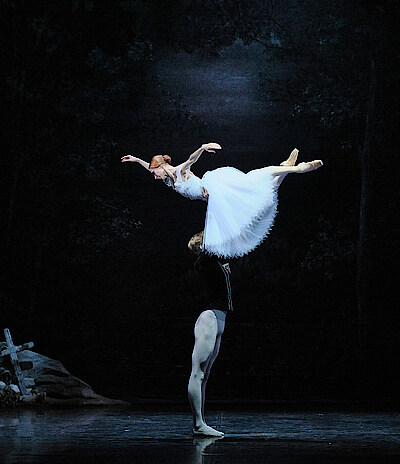
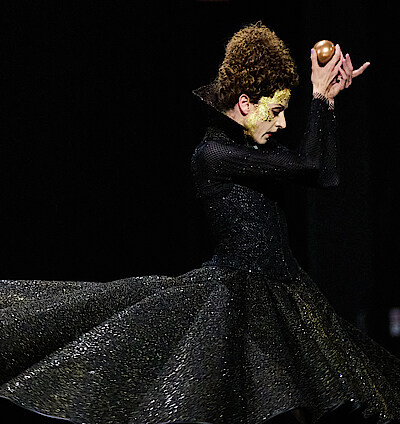
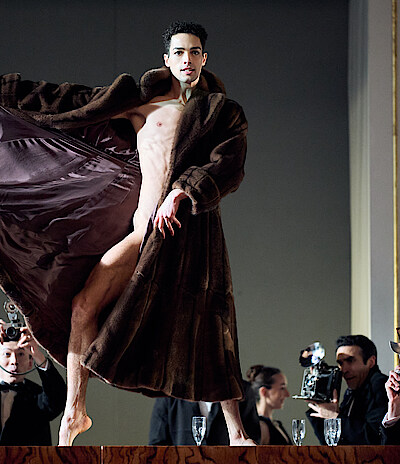
Children and young people under the age of 18 pay €10 for any seat at family performances.
Even before the performance, children and young people can prepare for their ballet visit in workshops together with their parents. These age-appropriate introductions offer insight into the storyline, allow them to get to know the characters, and include dancing short scenes from the piece. The workshop takes place two hours before the performance begins.
Registration required
Phone: 030 34 384-166
Email: contact@tanz-ist-klasse.de
Children and young people under the age of 18 pay €10 for any seat at family performances.
Even before the performance, children and young people can prepare for their ballet visit in workshops together with their parents. These age-appropriate introductions offer insight into the storyline, allow them to get to know the characters, and include dancing short scenes from the piece. The workshop takes place two hours before the performance begins.
Registration required
Phone: 030 34 384-166
Email: contact@tanz-ist-klasse.de


Behind the classic
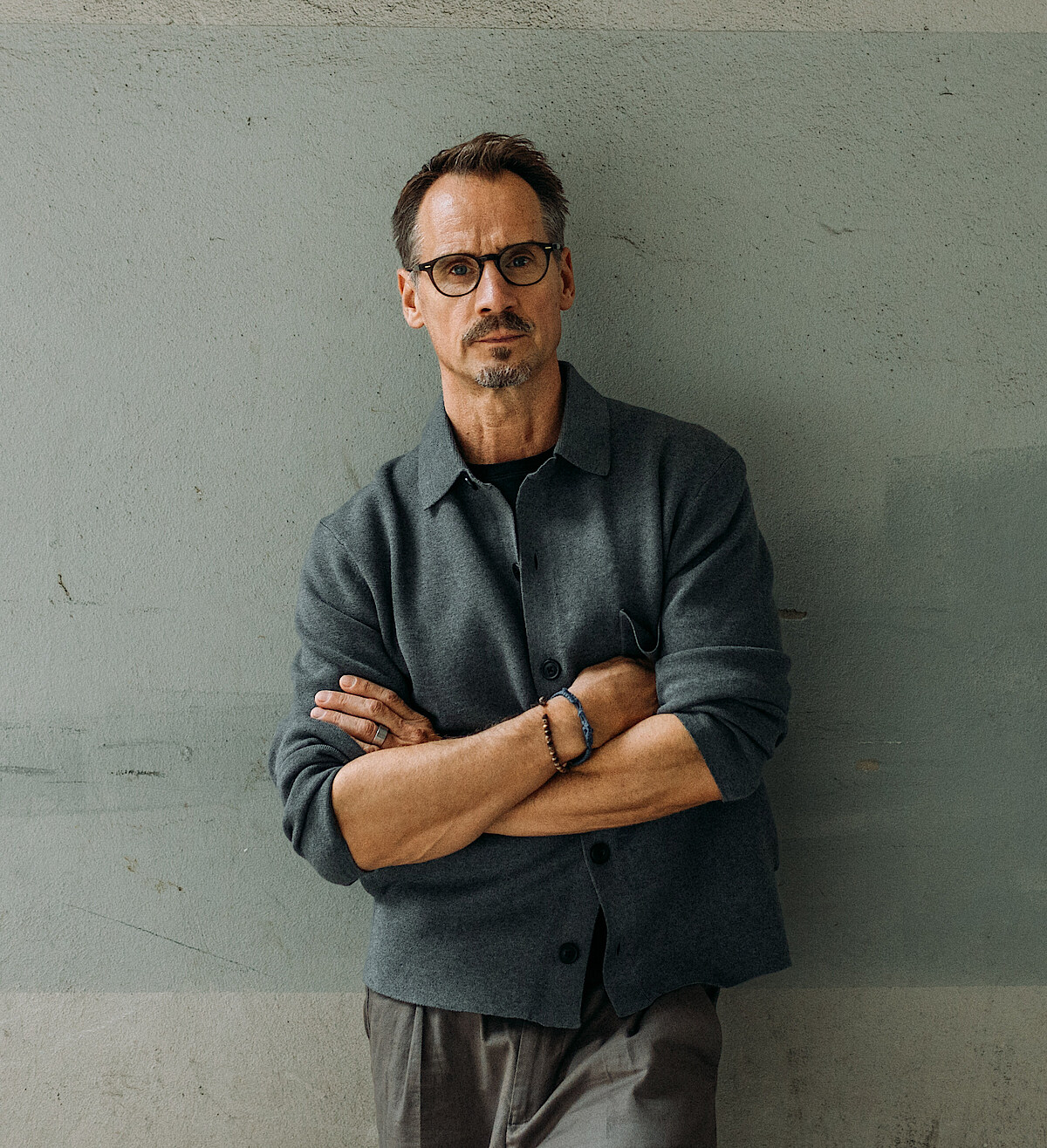
Christian Spuck in conversation
Katja Wiegand (KW): Christian, The Nutcracker is considered the quintessential Christmas piece. What originally prompted you to devote yourself to this supposedly familiar material, and why are you staging it again in Berlin after Zurich?
Christian Spuck (CS): When we developed the piece in Zurich in 2017, I was already fascinated by the psychological depth of E.T.A. Hoffmann’s novella (1816). This classic was still missing from Zurich’s repertoire, and I was particularly attracted to Peter I. Tchaikovsky’s composition. For Berlin, however, I decided against simply reviving the Zurich version. I wanted to choreograph the work anew especially for this large ensemble. The fact that we are now showing The Nutcracker in Berlin is also a response to the great longing of the audience and the orchestra for this demanding score. It is much more than a mere string of melodies; it is highly complex, challenging, and a wonderful task for any orchestra.
KW: From your perspective as a choreographer, what are the special musical characteristics of this work?
CS: While Tchaikovsky uses a leitmotif technique even more intensively in The Sleeping Beauty to create musical portraits of characters, The Nutcracker is a vibrant, almost intoxicating blend of diverse timbres and folk song elements. Here, he saw himself less as a strict dramatist and more as a visionary of a fantastic world of sound. He created balanced musical miniatures in close collaboration with the choreographer, Marius Petipa. This detailed yet symphonically dense structure allows me to reinterpret the rhythmic precision of the music as a bridge between classical form and modern psychology.
KW: To what extent does the literary source material inform your work?
CS: My approach is based on E.T.A. Hoffmann’s original novella, which is essentially a dark tale of “black romanticism” and is by no means a pure children’s story. Over the decades, the story has been greatly altered by a more commercial approach to performance. However, Hoffmann’s world is much more complex. He raises questions about identity, the uncanny, and transformation that often remain unanswered in traditional ballet productions. For me, it was important to regain this depth and reveal the core of the narrative again, focusing on the character of Marie.
KW: Why is Marie at the centre of the action for you?
CS: In Zurich in 2017, we filled in the logical gaps in the narrative. In the current Berlin production, however, we experience the story through her eyes. In E.T.A. Hoffmann’s original story, Marie is ill, and her fever dream forms the bridge between reality and fantasy. She is a young girl on the threshold of adulthood, having to assert herself in a world of fantasy and longing. It is also a story of inner liberation: she bravely chooses to follow her feelings and her love, even if it takes her into a world that oscillates between dream and reality.
KW: The second act of a classical ballet often features national dances, a tradition that is frequently questioned today due to its stereotypical portrayal. How do you address this issue in your choreography while maintaining the musical integrity?
CS: This is an aesthetic challenge that I approach very cautiously. Rather than reproducing the exoticism that has developed over time as mere decoration – a colonial cliché that is rightly perceived today – I aim to embed these dances in a new visual world. Here, the motifs can become part of a dazzling theatrical fantasy that influences Marie, while still remaining recognisable as part of an artificial, stage-like performance. The familiar elements of her world are transformed into something fantastical. Her aunt becomes the Snow Queen and the household staff appear as part of an opulent flower waltz. In this dazzling world of clowns, flowers, and snowflakes, Marie finds an environment that is as fascinating as it is mysterious.
KW: Alongside Marie, Drosselmeier is one of the most important characters in the story. How would you describe his role in your ballet?
CS: In E.T.A. Hoffmann’s work, Drosselmeier is a deeply ambivalent figure of dark romanticism, almost sinister. In my interpretation, however, he is not an omnipresent “showmaster,” but rather someone who operates from the background, like a magician pulling the strings. He is the bridge between worlds, someone who not only motivates Marie’s imagination, but also manipulates it. He exploits her childlike credulity to create his own reality, which gives him a dark depth that goes far beyond the image of the benevolent godfather.
KW: How is Marie’s fantasy world visually realised?
CS: Clichés stifle imagination, so my set designer, Rufus Didwiszus, and I decided to create a stage that presents itself as a place of constant transformation. We were guided by the mechanics of old theatre scenery, in which sliding and moving elements create new worlds before the audience’s eyes. Emma Ryott has designed magnificent, historically inspired costumes set at the turn of the century, but with a dash of fantastic humour. Although we dance classically on pointe, our aim is to create a visually stunning, original Nutcracker that celebrates the magic of theatre itself.
KW: E.T.A. Hoffmann closely linked this story to the Christmas atmosphere in Berlin. What feeling would you like the audience to take home with them at the end of the evening?
CS: I see my work as a constant exploration of the tension between reality and fantasy. I would be very happy if people went home after the performance feeling inspired to read Hoffmann’s original novella again. Christmas is that special time of year when we open up to each other and experience an almost childlike sense of anticipation. My greatest wish is to enchant the audience and create a moment of humanity, warmth, and festivity.
Taken from the 26/27 season brochure