Children and young people under the age of 18 pay €10 for any seat at family performances.
Even before the performance, children and young people can prepare for their ballet visit in workshops together with their parents. These age-appropriate introductions offer insight into the storyline, allow them to get to know the characters, and include dancing short scenes from the piece. The workshop takes place two hours before the performance begins.
Registration required
Phone: 030 34 384-166
Email: contact@tanz-ist-klasse.de

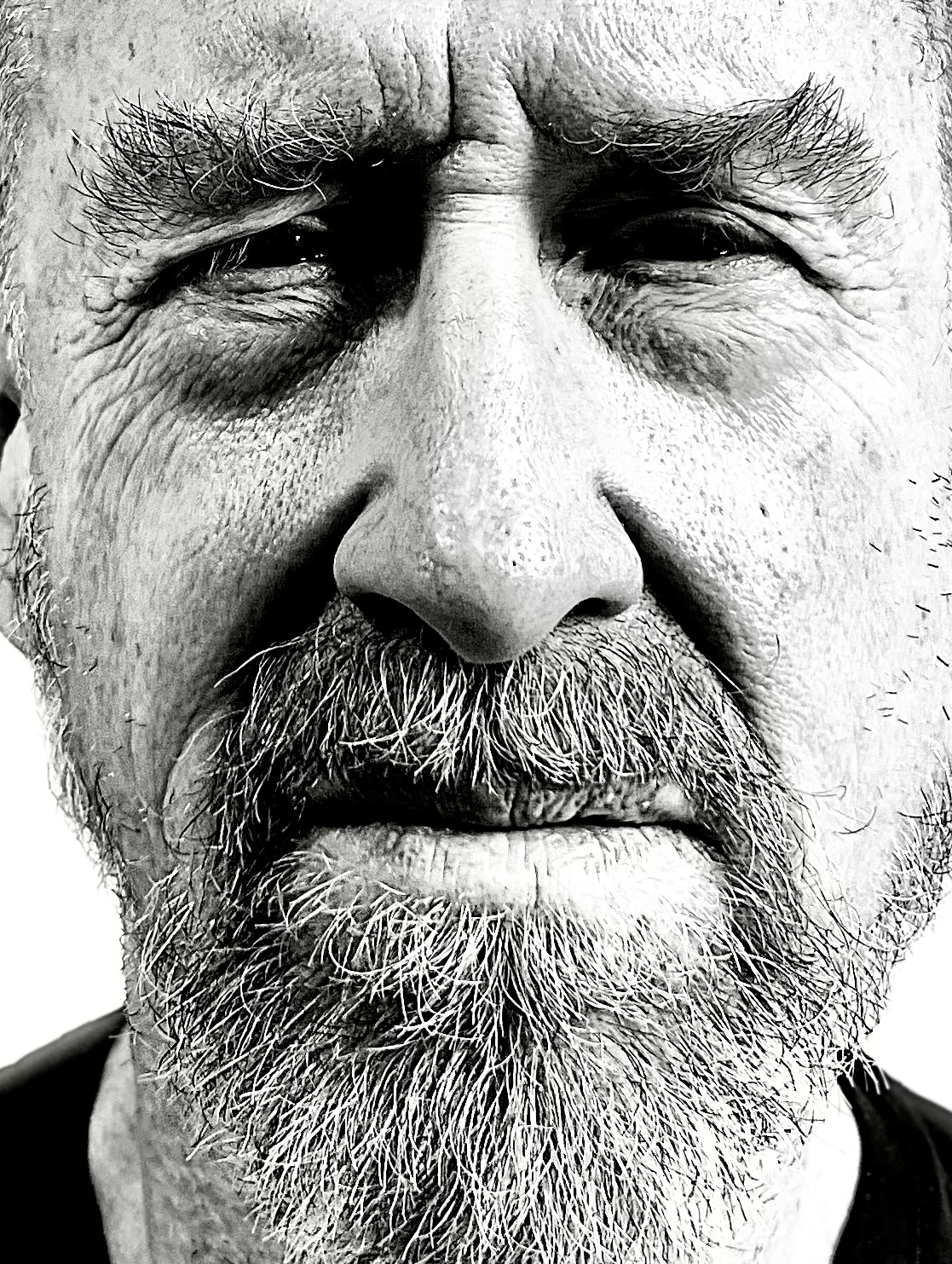
«Consciousness emerges in movement.»
William Forsythe in conversation with Christian Spuck
Christian Spuck (CS) We have shared many conversations over the years. As you observe your influence on younger choreographers today, what does this ongoing dialogue with the next generation mean to you?
William Forsythe (WF) I am not entirely certain it is a dialogue, though it is nice to think that people feel connected to what I’ve offered. Examples of work that resonate with us, acting as viable models, is what helps us understand possibility. Actually, it’s the questions that a work brings up that I have found most valuable. I remember once watching a colleague’s fascinating work and asking myself, «what kind of life must they have led in order to frame those decisions».
In the studio, I consciously construct my interactions to provide dancers with tools for their own creative agency. You never know if a creative pioneer is standing right in front of you. I aim to instantiate a style of interaction that aligns with the current generation’s unique way of receiving and processing information.
CS When seeing your work, there is always a sense that thinking and movement are inseparable. How would you describe that relationship within the context of the dancers’ practice?
WF Movement does not come after consciousness. Instead, awareness takes form within motion itself, as the body continuously senses, adjusts, and anticipates its own actions. Ballet dancers monitor the sensation of their actions and engage in a process of adjustment where the body often solves physics problems before the mind contemplates the solution. This experience is full of valuable information that allows the dancer to eventually reflect on the nature of their conscious process of preparedness vis-à-vis that reflexive solution the prepared body offered.
CS You often encourage dancers to push the boundaries of their innate skills. How does the possibility of failure play into the excitement of your choreography?
WF Ballet dancers are always in a precarious situation, submerged in an environment of choreographic predicament where they must constantly confront risk. Ballet choreographies are synthetic predicaments that have, ideally, solutions. The audiences observe a dancer go through a kind of test, where the potential for disaster is always present. We watch them deal with centrifugal forces and inertia, and yet pushing the envelope without the work actually dismantling.
CS The piece Of Any If And feels physically strained, pushing the dancers to their limits. Is this state of exhaustion necessary to reach a deeper emotional level?
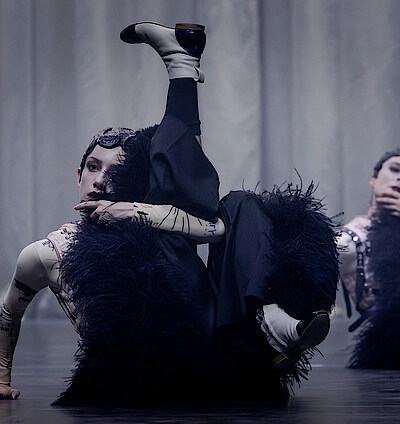
WF I will never ask a dancer to simulate an emotion. What we are watching is dancers immersed in a semiotically charged environment. The excitement of ballet comes from the fact that the outcome is never guaranteed, as ballet always asserts an inherent resistance to its own realization. The audience constructs its own emotional signifiers based on the dancer’s very real struggle to navigate that resistance. But of course, the dancers are schooled to test the boundaries, to push the envelope of that instability. It is the underlying behavioral substance of bravura. The exhilaration comes from watching someone skillfully navigate these vectors of possibility.
CSArtifact Suite (2004) is a condensation of your 1984 evening-length work. How did you decide which elements were essential to keep and which could be removed?
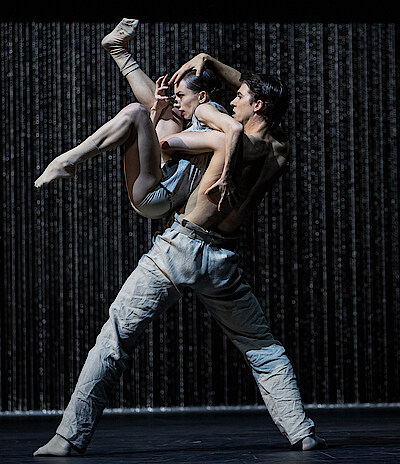
WF The original Artifact was designed for the massive scale of the Frankfurt Opera and included actors and complex staging. It was, curiously, made in just three weeks but directly on the opera house stage. I later realized that the danced sections possessed sufficient energetic flow to stand on their own. So, I focused on those choreographic parts that could persist through their distinct physical signature even without the full, original, theatrical machinery. The Suite is a distillation that captures the energy of intention without needing the full narrative framework. It allows the purely choreographic logic to become the primary focus of the piece.
CS You have often said that every revival is actually a new version of the work. Will you ever stop editing and re-working your pieces?
WF I think it is always worth improving a work if one’s own skill set, the «Handwerk», as a choreographer, has developed. I worked on Artifact for over thirty years, from 1984 to 2017, because I believed the work was worth the continued attention. A work is not a static object but a living system that should be refined and sharpened as the choreographic perspective evolves. As long as I see a way to make the intention clearer or more potent, I will continue to edit.
CS Finally, when you look at these two works side by side, what is the central link between them?
WF What links these works is a structural concern with ellipses, the gaps in historical knowledge and the function of absence. Whether it is the evaporation of language in Of Any If And or the historical «Leerstellen» in Artifact Suite, both pieces deal with appearance and disappearance. Ultimately, ballet is a spirit practice where we filter a certain kind of energetic possibility through this form. Both works use the presence of this energetic body to navigate the fragments of what we know and what has been lost.
Taken from the 26/27 season booklet.
«As soon as I know it's impossible, I want to do it.»
Composer Thom Willems in conversation
Dutch composer Thom Willems primarily writes music for ballet and has been collaborating with choreographer William Forsythe since 1985. Together, they have created more than 65 works. In our interview, Willems discusses his music and his long-standing collaboration with Forsythe.
Staatsballett Berlin (SBB) The music for your collaborations with William Forsythe was created on the computer. How did you get involved with electronic music?
Thom Willems (TW) During my studies in The Hague with Jan Boerman and Dick Raaijmakers, who were mainly responsible for electronic music. This was actually before the beginning of electronic music, with tape loops and Moog synthesizers. The computer stuff only came at the end of the 1980s.
SBB You have been working with William Forsythe since the mid-1980s. How did the collaboration with the choreographer begin?
TW He had just started at the Nederlands Dans Theater. I was a student and saw his pieces, so I reached out to him and said, «I want to be part of what you’re doing. Let's sit down and talk.» And then we just did it.
SBB So, you've been composing for ballet ever since?
TW I just grew into it – and couldn't get out anymore. [laughs] Suddenly, I was in the ballet world, and I stayed. It was never a conscious choice. But I found the ballet world exciting and modern. I already thought classical modern music was quite dusty back then, in contrast to the ballet world, which was youthful. That suited me better.
SBB What is a typical collaboration with William Forsythe like? Do you work on a concept first, or is there a lot of improvisation?
TW We talk about ideas, but we can do that everywhere: on tour, in the studio, when we go out to eat. It's that simple. There were no real instructions, but every piece has its own conceptual demands. You work on a repertoire. What was the piece before, what came after.
SBB So, you don't necessarily have the music composed in advance?
TW There were pieces where he choreographed first, and I provided the music afterward. Or we were all together in a big studio, playing live while he rehearsed. There were many ways of collaboration. For example, during the time of The Second Detail (1991), I used to send the final version, the last mix, to the National Ballet Canada in Toronto in the evening via Lufthansa. You could simply hand the tapes to the pilot at the counter. And someone from the ballet could pick them up at the Lufthansa counter in Toronto.
SBB What were the challenges of collaborating with William Forsythe?
TW When you collaborate with someone for 30 years, you have to constantly renew yourself. And that's the big challenge and also the big fun. Offering Forsythe an idea twice doesn't work. Even with pieces like One Flat Thing, reproduced, which are 25 years old, new ideas are still added. You have to stay attentive. That's the big adventure and journey with Forsythe.
SBB How do you search for something new? Do you have a specific method?
TW It has to do with your own repertoire. If a piece was very rhythmic, then it's certain the next piece won't be. That's how it's decided. Or if a piece has tone colour, then the next piece will be rhythmic. If a piece is overcrowded, then the next piece will be very empty. And that's how you introduce opposition into your own thinking, the search for a variety of possibilities.
Quoted from the programme brochure, 2024. The interview was conducted by Michael Hoh.