News
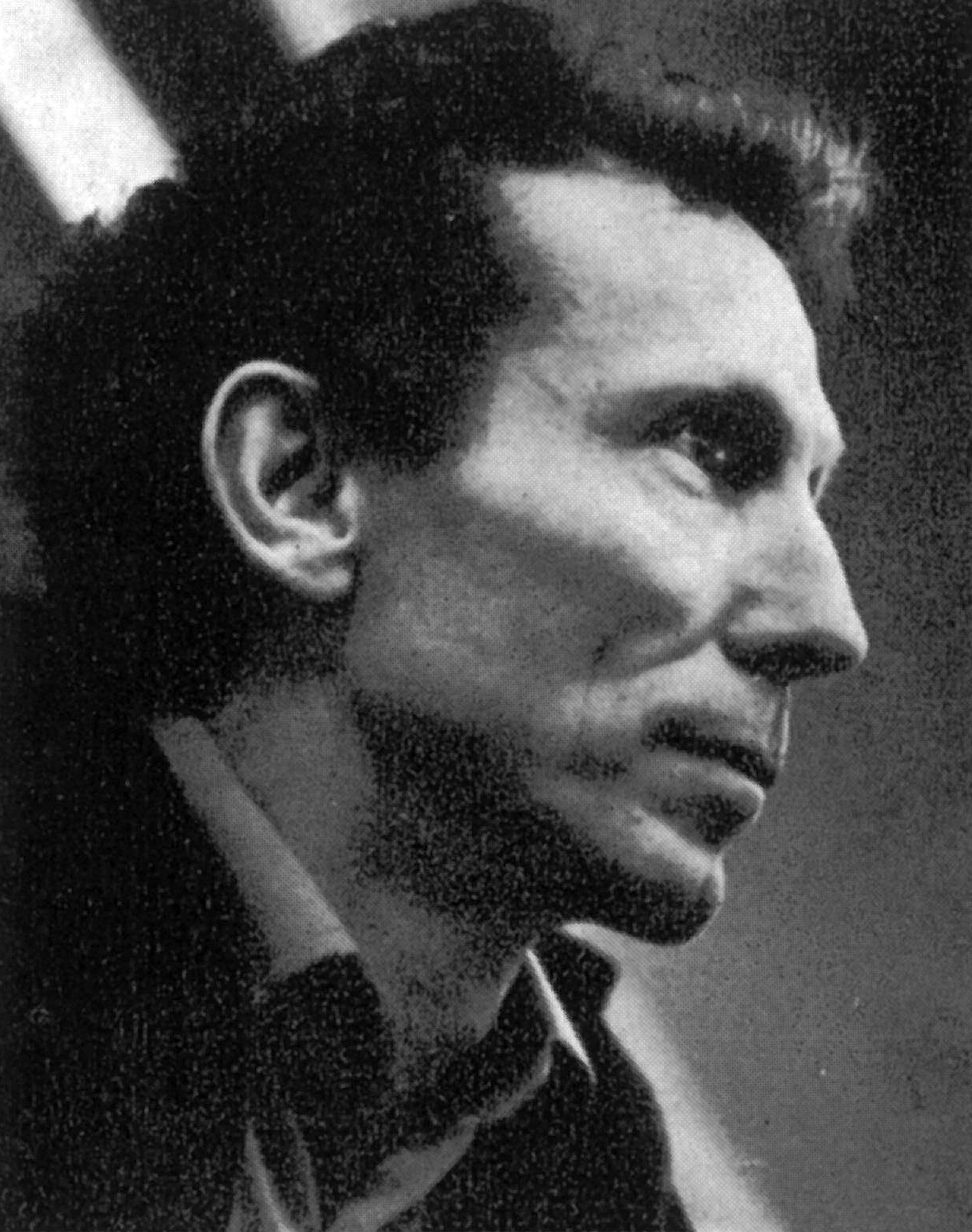
1928–2026
Staatsballett Berlin mourns the loss of Tom Schilling. The choreographer and head of the Tanztheater at the Komische Oper Berlin from 1965 until 1993 passed away on 16 January at the age of 98. For nearly three decades, he helped shape Berlin’s dance history. With his belief that dance must “justify itself as the only possible form of expressing a human event,” as Tom Schilling once put it, he won over a wide audience, and his work was closely followed internationally. He was never aiming solely at ballet aficionados; instead, he envisioned his audience as people who should be genuinely moved by a performance. In this way, Tom Schilling and the dancers of the Tanztheater at the Komische Oper Berlin became figures with whom audiences could identify.
Tom Schilling trained at the Dessauer Opernballettschule and studied with Dore Hoyer, Mary Wigman, and Olga Ilyina. He danced for several seasons in the ballet companies of Dresden, Leipzig, and Weimar, where he also began choreographing. From 1956 to 1964, he served as ballet director and chief choreographer at the Dresdner Staatsoper, and from 1965 at the Komische Oper Berlin. He also choreographed for other companies, including the Grand Ballet Classique de France, Ballet de Wallonie, the Norwegian National Ballet, the Ballet of the Wiener Staatsoper, and the Moscow Nemirovich-Danchenko Musical Theatre.
Yet at the heart of his work were always the personalities of the dancers in his own company: he created choreographies for them and with them. As a result, after his time at the Komische Oper, few of his works were performed elsewhere. He choreographed a large number of full-length ballets, including German premieres such as Die Fontäne von Bachtschissarai (Assafjew, Weimar 1955), Die steinerne Blume (Prokofjew, Dresden 1960), and Fancy Free (Bernstein, Berlin 1971).
Among his successes in Berlin were Abraxas (Egk, 1966), Aschenbrödel (Prokofjew, 1968), Romeo und Julia (Prokofjew, 1972), as well as Symphonie fantastique (Berlioz, 1967), La Mer (Debussy, 1968), Der Mohr von Venedig (Blacher, 1969), Undine (Henze, 1970), Match (Matthus, 1970), Schwarze Vögel (Katzer, 1975), Abendliche Tänze (Schubert, 1979), and Wahlverwandtschaften (Schubert, 1983).
Tom Schilling was awarded the Deutscher Tanzpreis in 1996 for his lifetime’s work. He received the Order of Merit of the State of Berlin and, in 2002, was inducted into the honorary gallery of the 101 Choreographers of the 20th Century. Staatsballett Berlin honours him by naming one of its three ballet studios, built in 2011, after him.
Tom Schilling visited frequently, always attending premieres and occasionally dropping by rehearsals. He was an engaging communicator, touching those he met not only with his openness but also with his remarkable modesty. One of his convictions, expressed in 1986, remains universal: “What matters is how the theatre experience reaches the audience and touches their emotions. When feeling is absent from the theatre, our world becomes increasingly technical. Our work in Tanztheater begins with humans and is directed toward humans.”
Aware that such a strong and uncompromising example of living Tanztheater practice shaped Berlin’s dance for decades, Staatsballett Berlin preserves the memory of Tom Schilling with profound gratitude.