George Balanchine
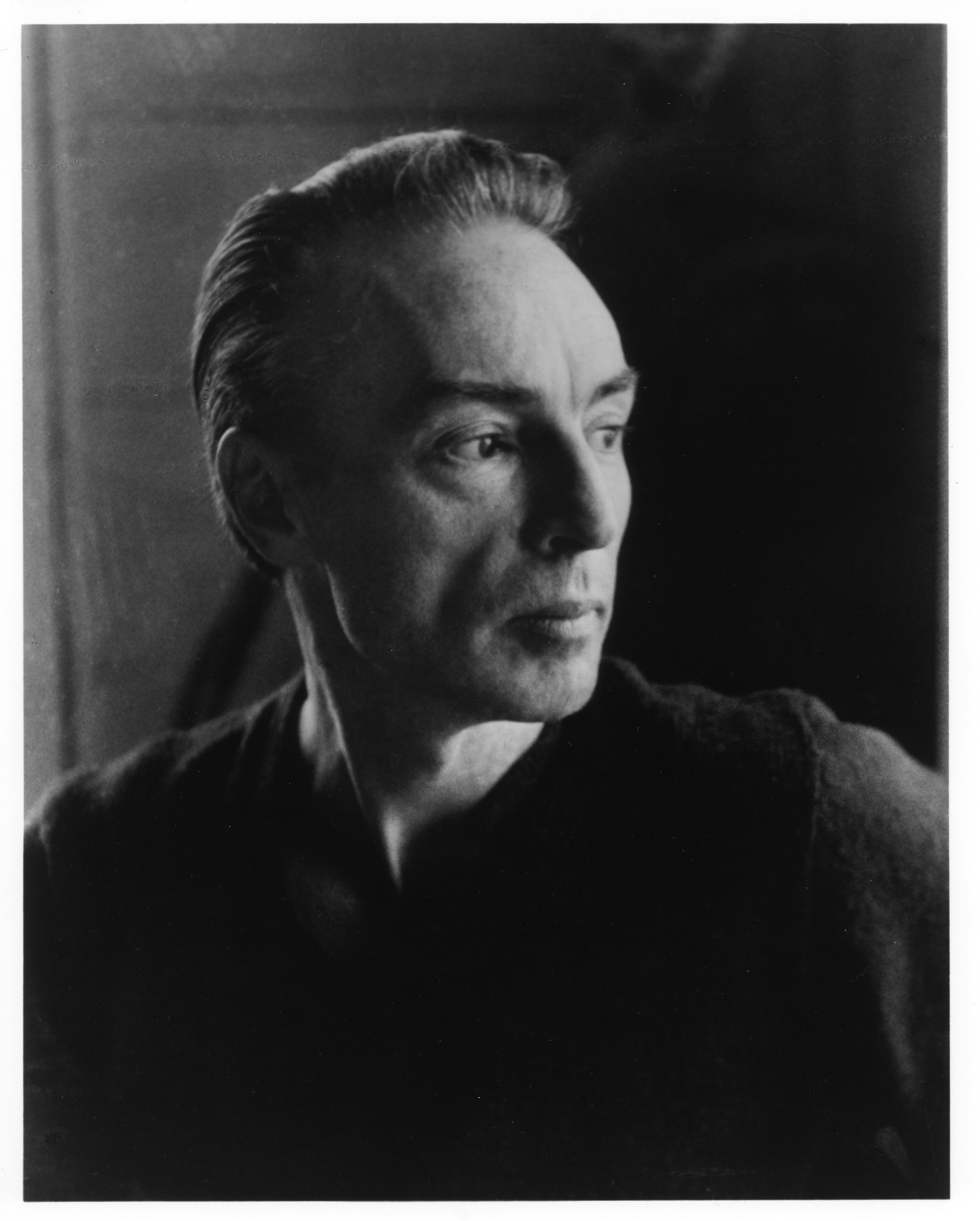
George Balanchine stands as one of the pivotal figures in the history of ballet. At the heart of his choreography lies music and pure dance, earning him the title of the father of neoclassical ballet and, more broadly, recognition as one of the most influential innovators and choreographers of the 20th century.
Born Georgi Balanchivadze in 1904, he grew up in Tsarist Russia and received both his artistic and dance training in St Petersburg, the great stronghold of 19th-century ballet. Alongside his dance studies, he trained in music and began experimenting with choreography while still a student. Shortly after leaving his homeland, he joined the Ballets Russes in Paris in 1924, where impresario Serge Diaghilev appointed him choreographer. There he met the young, adventurous Igor Stravinsky; their early collaboration produced Apollo and marked the beginning of a lifelong friendship.
The arts patron Lincoln Kirstein later invited him to New York to establish a school that would help foster ballet in America. Balanchine became director of what would become the School of American Ballet, and soon after, the American Ballet was founded. Once in the United States, he also worked with great success on Broadway, in revue theatre, for the circus and in Hollywood. At the same time, he continued to experiment—choreographing, for instance, a Baroque opera—and in 1937 he staged his first Stravinsky Festival. Following several organisational changes, Balanchine and his company moved in 1948 to the purpose-built New York State Theatre, and from then on the company was known as the New York City Ballet. For this company he created numerous works, including The Firebird (1949), La Valse (1951), his first full-length ballet The Nutcracker (1954), Agon (1957), A Midsummer Night’s Dream (1962), and Jewels (1967), among many others.
From early on, Balanchine struck out on his own path, stripping narrative down to its essentials and expressing themes through a distinctive choreographic language. He did away with traditional ballet mime in favour of clarity. His style comes through most clearly in plotless ballets, where dance brings out the structure and form of the music itself. He repeatedly turned to composers such as Bizet, Chabrier, Glazunov, Glinka, Mendelssohn, Mozart and Ravel, while also drawing on 20th-century music—Hindemith, Webern and Xenakis among them—as well as popular and jazz influences like Gershwin. His favourite composers, however, were Tchaikovsky and, above all, Stravinsky, with whom he created more than thirty works.
Throughout his life, he regarded Marius Petipa as his artistic forebear and remained committed to the classical vocabulary of movement, even as he pushed it further. Hallmarks of his style include an extreme turnout, dynamic, precise and powerful movement that fully engages the hips, and intricate, often athletic combinations delivered at speed and always closely tied to the music. He pursued formal beauty—even purity—and a level of technical brilliance that demanded exceptional artistry from his dancers, especially his ballerinas.
His muses, often recruited at a very young age from his own school, were typically tall and slender. The qualities he prized in his ideal ballerina were strength, speed, precision and balance. He was married to four ballerinas—Tamara Geva, Vera Zorina, Maria Tallchief and Tanaquil LeClercq. George Balanchine died in New York City on 30 April 1983.